Ir al contenido

ULTRA-xr Markes International

100-tube autosampler for unattended high-throughput thermal desorption analysis.

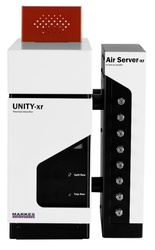
ULTRA-xr™ is a high-throughput autosampler that adds to the UNITY-xr thermal desorption unit, for the rapid and unattended analysis of VOCs and SVOCs from up to 100 sample sorbent tubes in a single sequence.

ULTRA-xr is ideal for analytical laboratories wishing to upgrade their existing UNITY-xr system to process multiple sample tubes efficiently, or upgrade their ability to re-collect split samples.

Beneficios del producto

• Con capacidad para hasta 100 tubos sumado a las ventajas del sistema de alto rendimiento UNITY-xr, que permite generar datos fiables durante todo el fin de semana.

• Con la opción de recolección automatizada de la muestra para repetir el análisis, el equipo ULTRA-xr ofrece un sencillo método de validación de datos y supera la limitación del "one-shot" de otros sistemas.

• Los sistemas ULTRA-UNITY-xr son compatibles con los sistemas de análisis de automatización en línea y de canister, lo que le permite expandir el sistema a medida que crecen las necesidades de su laboratorio.

• Libere su personal de laboratorio con la automatización robusta de su dispositivo de desorción térmica UNITY-xr-líder en el mundo.

Características

• Permite el procesamiento automatizado y desatendido, sin el uso de líquidos criogénicos de hasta 100 tubos de muestra.

• La recolección cuantitativa de los flujos de división, que le permiten asegurar los resultados.

• Diseño robusto que tiene capacidad para tubos de muestreo estándar de 3½.

• Compatibilidad con una variedad de analitos en un amplio intervalo de concentración, que hacen que el sistema UNITY-ULTRA-xr sea un sistema ideal para la mayoría de aplicaciones TD-GC-MS.

• Test de fugas de tubos, gestión del agua y adición de estándares internos que ayudan al desarrollo de métodos.

• Fácil seguimiento de las muestras, con tecnología TAGs RFID a través del código de barras.

• Piezas de alta precisión que aumentan la robustez.

Automatización
El automuestreador de tubos se conecta al equipo de desorción térmica sin tener que realizar modificaciones importantes.
Compatible con tubos marcados con etiquetas de radiofrecuencia (RFID) y capaz de leer/escribir etiquetas, para facilitar el seguimiento de los tubos y automatizar el proceso de insertar información específica sobre los tubos dentro de la secuencia.
Capacidad para 100 tubos estándar para máxima productividad (operación ininterrumpida durante una semana).
Opcionalmente permite el uso de tubos DAAMS de 4.5 pulgadas (115mm).
El automuestreador puede operar superponiendo los ciclos (overlap) de manera que durante el cromatograma de la muestra anterior se empieza con la desorción del tubo de la muestra siguiente.
Opción de purga seca de los tubos con gas portador, en la dirección de muestreo y a temperatura ambiente, como parte de la secuencia analítica automática según Método US EPA TO-17.
Sellado adecuado de los tubos antes y después del muestreo con tapones inertes y sin emisiones de volátiles. Evitando mecanismos de sellado inadecuados como colindar los bordes del tubo contra una superficie plana o el uso de septums.
Los tapones utilizados en el automuestreador no emplean aros recubiertos con PTFE como sellos, ya que han mostrado fugas causando pérdidas de analitos y posibles contaminaciones externas.
El instrumento no necesita sacar o recambiar los tapones durante el análisis, minimizando el riesgo de fallo mecánico.
Cada uno de los tubos se somete a un test de fugas sin flujo, a temperatura ambiente, antes de la desorción. Si se detecta fuga el tubo no es analizado, quedando intacto y registrado en la memoria del sistema para una intervención posterior del usuario. Después de una incidencia en el test, el sistema continua testeando y analizando los tubos siguientes.
Si durante una secuencia automática un tubo no pasa el test de fugas, se inicia un análisis por GC para mantener sincronizada la secuencia del equipo con la del GC(-MS). El sistema para en caso de errores mayores (p. ej. los que requieren una intervención del usuario sobre el propio sistema).
El equipo ofrece la opción de adición automática de estándar interno en fase gas a cada tubo, en la dirección del muestreo.
Adición de estándar interno siempre posterior al test de fugas y siempre previa a cualquier otra etapa de operación según las recomendaciones de métodos estándar como US EPA TO-17.
Permite la introducción de estándar interno en fase gas a tubos en blanco, después del test de fugas, sin someterlos al proceso de desorción. Ello permite cargar tubos en blanco con estándar interno antes de ser usados para muestreo en campo.


Recolección automática
Recolección automática del flujo proveniente del split de la trampa fría (hasta 50 tubos) con un solo automuestreador de TD, y sin usar el tubo original (primario) para el proceso de recolección (patente GB2395785)
Opción de recolección manual del flujo proveniente del split de entrada (tubo) y de salida (trampa), para facilitar la validación de métodos de split de entrada o doble split.
También es posible automatizar la recolección de los flujos provenientes tanto del split de entrada como del de salida para 100 tubos mediante un segundo automuestreador.

TD40.Direct desorption of VOCs and SVOCs from leather furnishings.pdf TD33.Analysis of the interior atmosphere of a passenger car by TD-GC-MS.pdf TD14.Monitoring labile, high-boiling organic vapours such as those found in -clean room air- in semi-conductor fabrication plants.pdf TD28.Optimising Analytical Performance and Extending the application range of thermal desorption for monitoring air indoors and inside vehicle cabins.pdf TD56.TD-GC-MS analysis of VOCs for material emissions testing.pdf TD55.Using the FLEC to determine emissions of VOCs from materials and products.pdf TD57.Characterisation of paint samples by direct desorption TD-GC-MS.pdf TD59.Direct desorption of car trim materials for VOC and SVOC analysis in avvordance whit VDA method 278.pdf TD62.Materials emissions testing in the semiconductor and electronics industries.pdf TD65.Automating the measurement of VOCs ans SVOCs in materials using direct thermal desorption.pdf TD66.Improving the identification and measurement of trace odorous and toxic compnents during material emissions testing.pdf TD67.Introducing the Micro-Chamber-Thermal Extractor for rapuid emissions screening of products and materials.pdf TD70.Materials emissions testing using the FLEC® Cell, testing recovery and sink effects.pdf TD69.Correlation of emission rates determined using the Micro.Chamber-Thermal Extractor whit those for conventional emission-chamber tests.pdf TD68.Using Markes emission screening technology to simplicity compliance whit construction product regulations.pdf TD71.Summary of FLEC Applications.pdf TD72.An Introduction to Emission Cells and comparison to small chambers for material emissions testing.pdf TD73.The performance of Markes Micro-chamber- Thermal Extractor for low-cost, fast and meaningful material emissions screening.pdf TD89.Thermal desorption technology for testing chemical emissions from construction products and consumer goods.pdf TD90.Automated detection of trace target compounds in complex chemical emission profiles from products and materials.pdf TD93.Rapid microchamber tests for screening chemical emissiond from car trim in accordance with ISO 12219-3.pdf TD74.The suitability of emission cells for emissions testing and a comparison with samll chambers.pdf TD103.Enhancing the development of low-emitting products and materials.pdf

TD3.National and international standard methods relating to speciated monitoring of vapour-phase organic compounds in air.pdf TD5.Advice on sorbent selection, tube conditioning, tube storage and air sampling.pdf TD15.On-line process control of speciated organic chemicals in industrial gases at sub-ppb levels.pdf TD18.Developments in the determination of nitrous oxide using TD-GC.pdf TD16.Round-the-clock, on-line and cryogen-free monitoring of hydrocarbons from acetylene to trimethylbenzene in ambient air.pdf TD32.The analysis of sulfur compounds using on-line and off-line TD-GC.pdf TD29.VOC air monitoring technology and its application to contamined land.pdf TD35.Thermal desorption of dioctyl phthalate and other plasticisers.pdf TD27.A review of sorbent-based sampling methods for VOCs and SVOCs in air.pdf TD38.Occupational Exposure Limit Levels for VOCs compatible whit TD-GC.pdf TD37.Workplace Air Monitoring using Pumped sampling onto sorbent tubes and analysis by TD-GC-MS.pdf TD46B.Monitoring organic vapours in air – A comparison of thermal desorption and carbon disulfide(CS2) extraction.pdf TD46.Monitoring organic vapours in air – A comparison of.pdf TD53.Quantitative recovery and method validation of high-boiling SVOCs using TD-GC-MS.pdf TD47.The Analysis of Landfill Gas Compounds using TD-GC-MS.pdf TD49Fenceline and ambient monitoring of benzene and other hydrocarbons using diffusive samping and TD analysis.pdf TD77.Using Thermal Desorption for Industrial (Stack) emissions testing.pdf TD81.Analysis of canister air samples using cryogenfree thermal desorption in compliance with US EPA method TO-15.pdf TD80.Evaluation of a ‘Soil Gas’ sorbent tube for improving the measurement of volatile and semivolatile fuel vapors in contamined lan.pdf TD86.Monitoring 'air toxics' in ambient air using sorbent tubes by automated, cryogen-free thermal desorption on accordance with US EPA method TO-17.pdf TD87.A cryogen-free method for monitoring trace greenhouse gases in air.pdf TD97.Analysis of polycyclic aromatic hydrocarbons from vehicle exhaust using TD-GC-MS.pdf TD99.Using the CIA Advantage for automated cryogenfree analysis of canister air and gas.pdf TD102.Investigation of the performance of sorptive extraction cartbrige for air monitoring.pdf

TD2.Prediction of uptake rates for diffusive tubes.pdf TD1.Uptake rates for tube-type axial diffusive samplers.pdf TD6.Common problems with thermal desorption and how to solve them.pdf TD4.Publications and presentations citing Markes’ products.pdf TD7.Calibration, Preparing and introducing thermal desorption standards using sorbent tubes.pdf TD8.Principles of diffusive monitoring.pdf TD10.Use of diffusive samplers with TD–GC analysis for monitoring VOCs in ambient air.pdf TD9.Monitoring materials and processes for VOCs at high and trace levels.pdf TD17.The GC-FID sensitivity of the UNITY thermal desorber.pdf TD13.Evaluation of the Bio-VOC- a low-cost, simple device for biological monitoring of VOCs in breath.pdf TD19.Minimising artefacts – Considerations for storage and transport of sorbent tubes.pdf TD20.Confirming sorbent tube retention volumes and checking for analyte breakthrough.pdf TD21.Developing and optimising TD methods.pdf TD22.Selection of gas flows and split ratios during thermal desorption.pdf TD24.Overcoming the ‘one-shot’ limitation of thermal desorption by the re-collection of desobed samples.pdf TD25.Calculating atmospheric concentrations from analyte masses retained on sorbent tubes.pdf TD26.Minimising analytical interference from water during the analysis of sorbent tubes.pdf TD30.Certified Reference Materials for Analysis of VOCs in air by TD-GC.pdf TD35.Thermal desorption of dioctyl phthalate and other plasticisers.pdf TD12.Analytical thermal desorption, History, technical aspects and application range.pdf TD60.The complementary role of thermal desorption and other sample introduction technologies fo GC.pdf TD42.Uptake rates for radial diffusive samplers.pdf TD61.Diffusion-locking technology.pdf TD75.Liquid standard injection, tube impedance and other factors that may cause discrimination during the calibration of TD methods.pdf TD64.Simultaneous TD-GC(-MS) analysis of VOCs and SVOCs.pdf TD79.Air monitoring - the respective advantages and applications of canisters and tubes.pdf TD85.GC-MS data analysis using ClearView™ background compensation software,dealing with common ions.pdf TD82.TubeTAG™ - Enhanced tracking of sampleand and tube-related infromation for thermal desorption.pdf TD83.Using ClearView background compensation software to enhance GC-MS methods for trace compound analysis.pdf