Skip to Content

Pyroprobe AS6250

Increase the throughput of your pyrolysis laboratory by using the AS6250 Pyroprobe Autosampler. The AS6250 provides hands-free analysis of up to 50 samples and enhances operational capacity allowing unattended operation over a weekend or holiday period. Solid, viscous liquid and powder samples are analyzed directly, eliminating the need to perform lengthy sample extractions or derivatizations. A patented heating method provides the flexibility to perform both high performance thermal desorption and pyrolysis on the same sample. Microsoft Windows compatible software facilitates methods development and allows for standard operating procedures to be written for GLP/GMP compliance.

Previously inextractable materials such as natural and synthetic polymers, paints, laminates, fuels, packaging materials, rubber, surfactants, textile materials, inks, and adhesive tapes can now be analyzed with a GC or GC/MS thanks to the AS6250 Autosampler.


Designed with high precision and state-of-the-art electronic control, the AS6250 heats semivolatile and nonvolatile materials at operator definable temperatures up to 1300°C with heating rates up to 20,000°C/ per sec. Flexibility of control for heating rates, start and finish temperatures and hold times permit both thermal desorption, headspace, and pyrolysis experiments to be performed as required.

Direct analysis saves time and valuable research funds by eliminating solvent extraction and sample derivatizations. Furthermore, quality control and methods development applications benefit from the high level of reproducibility of the Autosampler. Decisions can be made quickly based upon relative area ratios of peaks in the sample chromatogram.

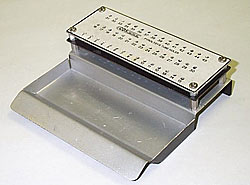
The AS6250 Autosampler can be operated in either the manual single sample mode or the automated mode with 50-position sample tray as standard.

Standard temperature controls include multi-ramp capability from ambient to 1300°C with ramp rates from 20°C per millisecond to 0.01°C per minute. Independent control of the Autosampler interface temperature up to 300°C and a programmable clean heating function ensure that background contamination is not a problem. Short sample path lengths between the pyrolysis chamber and the GC injector ensure that chromatographic resolution is maintained.

 

Analysis of Acrylate Polymers by Direct Pyrolysis-FT-IR.pdf Analysis of Photocopier Toners by Pyrolysis-FT-IR.pdf Analysis of Poly (vinyl chloride) by Direct Pyrolysis FT-IR.pdf Analysis of Polyolefins by Pyrolysis Gas Chromatography.pdf Analytical Pyrolysis of Surfactants.pdf Capillary Gas Chromatography of Polyolefin Pyrolysates.pdf Degradation Mechanisms-Depolymerization.pdf Degradation Mechanisms-Random Scission.pdf Degradation Mechanisms-Side Group Elimination.pdf Direct Pyrolysis-FT-IR. An Alternative Sampling System.pdf Dynamic Headspace and Pyrolysis in Ink Analysis.pdf Epoxy and Polycarbonate.pdf Evolved Gas Analysis of a Polyurethane Foam.pdf Evolved Gas Analysis of Polymers.pdf On-Column Cryofocusing for Improved Sensitivity Using Cryogenic Focusing.pdf Parameter Optimization in Pyrolysis-FT-IR.pdf Pyrolysis Gas Chromatography of Amino Acids.pdf Pyrolysis and FGA of Polyvinyl Alcohol.pdf Pyrolysis GC-MS of Biodegradable Plastic Packaging.pdf Pyrolysis of Fluoropolymers Polyvinyl Fluoride vs. Polyvinylidine Fluoride.pdf Pyrolysis of Synthetic Polymers-Improved Sensitivity Using Cryogenic Focusing.pdf Pyrolysis-FT-IR of Carbon-Filled Rubbers.pdf Pyrolysis-GC of Carbon-Filled Rubbers.pdf Pyrolysis-GC of High and Low Density Polyethlene.pdf Pyrolysis-GC of Polyolefins.pdf Pyrolysis-GC-MS of Power Coatings.pdf Pyrolysis-MSD for Rapid Polymer Analysis.pdf Pyrolytic Injection Inlet Autosampling System for the Analysis of Polymer Samples,.pdf Quantitation of Ethylene-Propylene Copolymers.pdf Quantitation of Low Levels of Methyl Methacrylate in a Copolymer.pdf Quantitative Determination of Poly (propylene-1-butene).pdf Quantitation of Epoxy to Hardener Ratios in a Cycloaliphatic Epoxy.pdf Quantitative Pyrolysis-GC in the Analysis of Copolymers.pdf Thermal Degradation of Polymers in Air.pdf Two-Step Polymer Analysis.pdf Using a Thermal Technique to Extract Residual Oligomers.pdf

Air freshener fragrances using Pyroprobe Microtrap.pdf Analysis of a Layered Paint Sample using Pyrotomy.pdf Analysis of Algae using Pyrolysis and THM.pdf Analysis of Cosmetics by Pyrolysis-GC-MS.pdf Analysis of Vulcanized Rubber by Pyrolysis-GC-MS,.pdf Antioxidant Detection in Petroleum Wax.pdf Biochemical Analysis by Pyrolysis-GC-MS.pdf Brominated Flame Retardant in PET.pdf Brominated Flame Retardants in a Polycarbonate.pdf Cracking Products of Oleic Acid and Olive Oil.pdf Detecting Differences in PEEK Preparation.pdf Four-Step Analysis of Smokeless Tobacco.pdf GC-MS of Plant Material.pdf GC-MS of Switchgrass.pdf Multi-step Analysis of Packaging Tape.pdf Multi-step Pyrolysis-GC-MS Analysis of a PVC Copolymer.pdf Pyrolysis Autosampling Reproducibility.pdf Pyrolysis GC-MS of Plant Derived (Cellulosic) Textiles.pdf Pyrolysis GC-MS to Characterize Artificial Sweeteners.pdf Pyrolysis of Fiber Blends.pdf Pyrolysis of Rubber with Antioxidant 6-PPD.pdf Pyrolysis of Soy Clothing Fiber.pdf Pyrolysis of Tobacco in Air.pdf Pyrolysis-GC-MS of Polyurethanes.pdf Pyrolysis-GC-MS of Tobacco with Menthol.pdf Tri-Step Analysis of a Latex Glove.pdf Tri-Step Analysis of Chewing Gum.pdf Injections using Pyroprobe.pdf Evaluation of Source Rock using EGA and Pyrolysis GCMS.pdf Py-GC HR-TOF of Circuit Board Polymer.pdf Pyrolysis and Reactant Gas to Detect and Study Antimicrobial Agents.pdf Pyrolysis of Coal Under Steam and Elevated Pressure PYGC.pdf Detection of Polymers Dissolved in Sea Water.pdf EGA and the Identication of a Clear Polymer.pdf Multi-Step Analysis of Automobile Tire Rubber.pdf Multi-Step Analysis of Coal by Pyrolysis-GC_MS.pdf